
Montgomery Village City Directory Collections
Montgomery Village has no municipal directory series of its own because it grew as a planned 1960s community, not an older incorporated city. Early coverage comes from outside the Village. It sits in broader Montgomery County and suburban material. Coverage then tightens as the first homes appeared. The strongest shelf pairs Montgomery History collections with Library of Congress telephone and criss-cross holdings. Each collection is partial. Together they connect a household name, a street, a parcel, and the county history that came before the Village.
| Collection | Years | Where Held | Access |
|---|---|---|---|
| Washington and Maryland suburban telephone directories | 1933–45; 1952; 1955; 1960/61; 1963/64; 1969/70; 1971–73 | Library of Congress, with selected digitized items | Catalog and selected online items; coverage varies by run |
| Eastern Montgomery County criss-cross directories | 1969–1996, with listed gaps and coverage notes | Library of Congress Science & Business Reading Room | Physical volumes requested in person |
| Lusk real-estate directories and property maps | 1951–1993 | Montgomery History, Jane C. Sween Library | Reading-room research |
| Montgomery History genealogy and local-history files | County materials from early records through modern community history | Jane C. Sween Library | Appointment-based, non-circulating research room |
Each format answers a different question. A telephone directory follows names. A criss-cross volume follows streets and house numbers instead. Lusk material can tie a property to sale dates and map information. Check the catalog description for the exact volume before treating any year as complete coverage of every Montgomery Village neighborhood.
Montgomery Village City Directories Begin Suburban
For years before the Village existed, an address search is the wrong starting point. Montgomery County dates to 1776. Its early trail runs through farms, land records, wills, tax material, maps, and census returns. The Village itself came later. Kettler Brothers began assembling the former Walker Farm and other land in 1962. Ground broke in 1966. The first residents arrived in 1967. That timeline explains why suburban telephone directories and later address tools matter more for Village households than colonial county sources.
Older entries often hide under other labels. Maryland Suburbs, Gaithersburg, Rockville, a subdivision name, or a telephone exchange may all hold the record. Search the neighborhood, not just the postal name. Whetstone, Goshenside, Stedwick, East Village, North Village, South Village, Walker’s Choice, and Cider Mill are local terms that surface material a broad Montgomery Village search misses. A spelling variant, an initial, a maiden name, or an altered street reference can also explain an apparent gap.
Montgomery Village Criss-Cross Directories
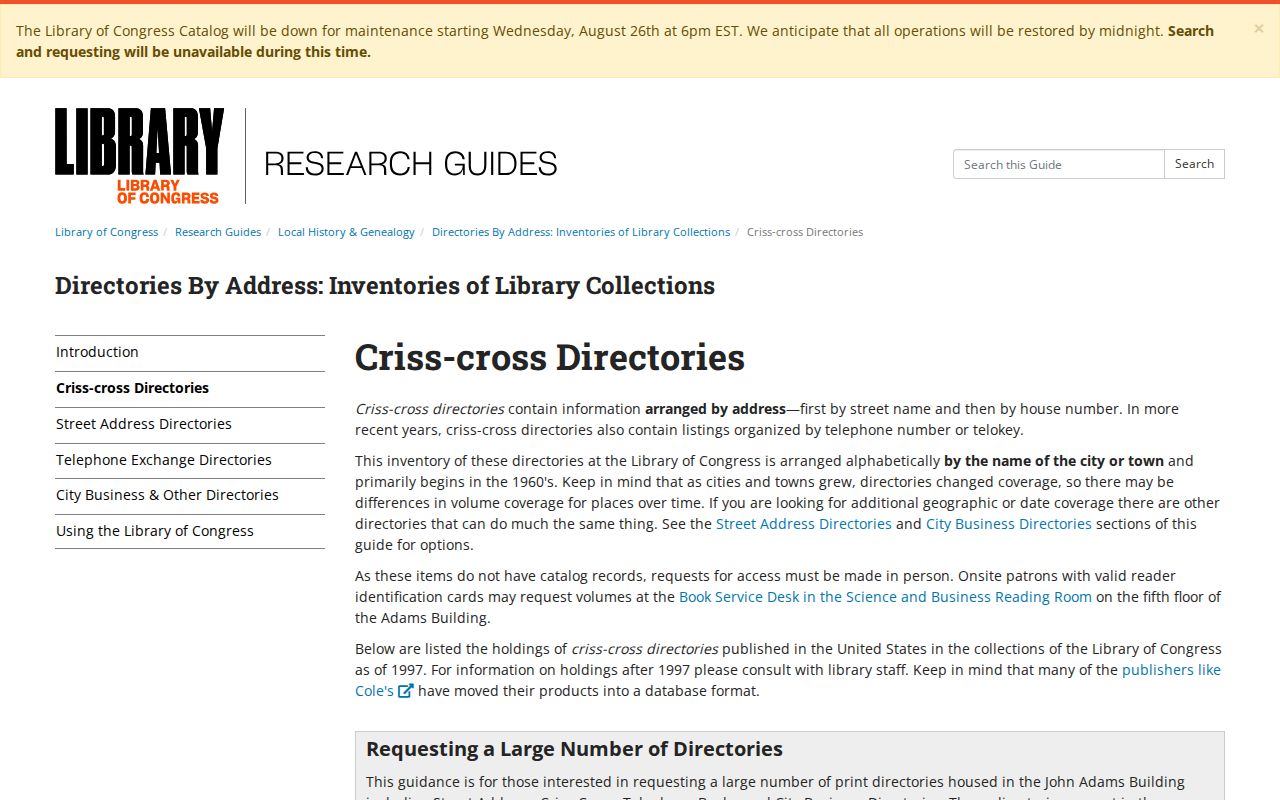
The Library of Congress inventory lists Eastern Montgomery County criss-cross volumes from 1969 through 1996. These books form the closest historical address-order layer for early Montgomery Village research. A criss-cross section lists streets alphabetically. House numbers follow in sequence. Then comes an occupant surname or initials, sometimes with a telephone reference. A volume can reveal a name tied to a known address in a given year. It cannot prove that every household member appears. An omission never proves absence.
The Library of Congress criss-cross directory guide documents the Eastern Montgomery County holdings. It also explains their uneven coverage.
Pick the closest useful year from the inventory. Then copy the house number, street spelling, initials, and any unit detail exactly as printed before comparing another volume.
Montgomery Village Directory Request Rules
A Library of Congress request is no ordinary catalog hold. Details matter at the desk. Staff at the Science & Business Reading Room book desk need the directory type, the place or state, and the exact year. Preparation pays off here. Catalog labels vary. A Montgomery Village run may sit under Eastern Montgomery County, Maryland Suburbs, Gaithersburg, a neighborhood, or a telephone directory instead of one uniform Village heading.
Some volumes are not immediately available online. The request desk is the documented fallback. Use the inventory first, request one or two closest years, and record a precise citation before widening the search.
Reading a Montgomery Village City Directory
Read only what the volume prints. Field patterns hold for the suburban telephone and criss-cross material. No digitized Montgomery Village page spells out local symbols for spouses, ownership, or occupations. Do not borrow those details from another publisher. An entry’s value lies in its date-specific link between a printed name and an address or street position. Other records can confirm the related facts.
| Surname and given name or initial | Telephone directories generally arrange households alphabetically; keep initials and suffixes as printed. |
|---|---|
| Street number and street | Telephone runs can show an address. In a criss-cross volume, the number follows the street-order sequence. |
| Telephone number | Some suburban telephone entries provide a number, while unlisted numbers and omitted household members create gaps. |
| Occupant name | Criss-cross entries place an occupant surname or initial after the street and number, sometimes with a telephone reference. |
| Volume date and coverage | Record the edition year and any catalog coverage note before comparing names across time. |
- Criss-cross directory
- An address-order directory: streets are alphabetical and house numbers run in sequence, allowing a known address to lead to a printed occupant name.
- Householder index
- A name-order arrangement that points from a person or household name to an address. Use it only when the selected volume actually provides one.
- Abbreviation key
- A legend printed by some directory publishers. Check the front matter of the specific volume before assigning meaning to a mark or abbreviation.
Note: A directory entry is evidence for the edition year only, not proof of a person’s current residence or a complete household roster.
Montgomery Village Telephone Directory Runs
Washington and Maryland suburban telephone directories give the name-first side of the picture. Criss-cross volumes supply the street-first side. Cataloged runs include 1933–45, December 1952, June 1955, 1960/61, 1963/64, and 1969/70. Maryland Suburban issues run from 1971–73. One 1969/70 Maryland Suburbs volume is digitized by the Library of Congress. Image, text, and PDF options are available. Dates and labels matter. A household can sit outside the Village name during its early development.
Start with the surname in a volume near the target year. Compare the printed address or phone listing against the next issue. Then watch for gaps. A different postal label can explain a vanished entry. So can an unlisted number, a changed surname, or a move. Telephone books are context, not a full residential roll.
Need something more recent? The Montgomery Village resident lookup draws on official property, court, and voter-record routes. Those routes carry their own access limits.
Montgomery Village Directory Maps
Montgomery History holds the Lusk real-estate directories and property maps. The run stretches from 1951 to 1993. Most volumes are arranged by sale date or address. That layout helps a Montgomery Village researcher bridge the county's rural tract era and the Village's earliest development. Entries can carry parcel references, owner names, map footprints, and Liber/Folio citations. Liber/Folio is simply the land-record book and page. Treat any Liber/Folio as a pointer. Carry it into the county land-record system before assuming a map alone proves a chain of ownership. The maps and atlases collection at Montgomery History also covers aerial tax maps for 1969, 1972, 1974, 1979, 1980, and 1981.
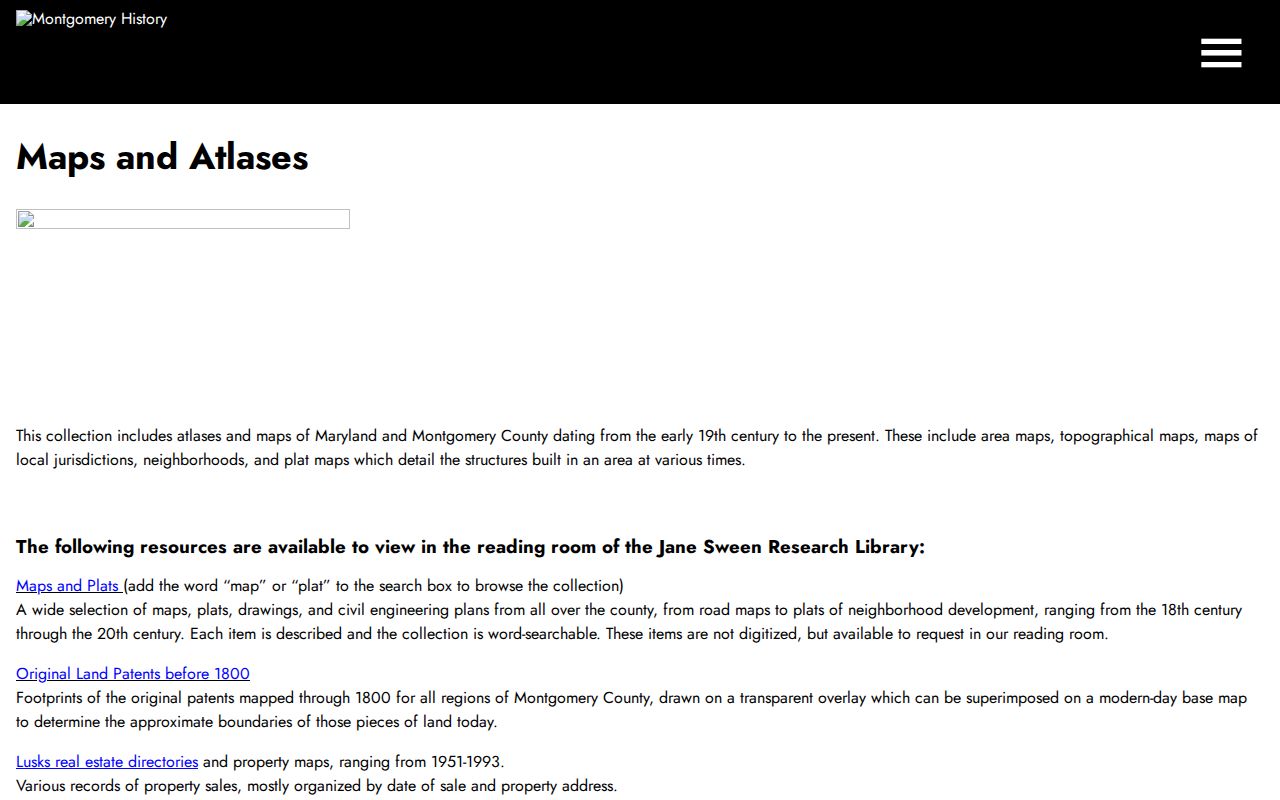
Used well, these maps give development and parcel context around an address pulled from a residents directory or street directory entry. What they cannot do is extend that entry past its publication date. A map shows land, not occupancy. Proof of who lived at a property after the directory came out still belongs to a dated record.
Tracing Families in Montgomery Village Directories
The strongest family research treats every record as evidence for its own moment. Fix the address's likely first occupied period first. The Village development history, property rolls, and maps are the right tools for that step. Then move to the closest criss-cross and telephone volumes and work forward. Expect breaks. A move, a changed initial, a new postal label, or an unlisted number can end a run of entries. When something does not line up, keep the doubt on the page. Let the next record type test it. Forcing a match only buries the error.
- Locate the closest criss-cross volume to the year and copy the address, name, initials, and unit detail exactly.
- Check nearby five- or ten-year intervals instead of skipping straight between census years.
- Search the Washington or Maryland suburban telephone directories for the same name and any alternate postal label.
- Pair the directory date with available federal census schedules. Personal schedules are public only through 1950 under the 72-year rule.
- Test an ownership question separately through SDAT and Maryland Land Records, because an occupant and deed holder can differ.
- Use obituaries, probate files, cemetery cards, church records, yearbooks, Sentinel articles, and biographical files to close a well-documented gap.
A name that drops out of the Montgomery Village directory may signal a move, a death, a changed listing, an unlisted number, or a simple coverage gap. No single cause is proven by absence. The Sween Library offers solid checks, including family files, church records, cemetery cards, obituaries, census copies, and newspaper clippings.
Montgomery Village Directory Research Room
For material a city directory cannot supply, the Jane C. Sween Library at Montgomery History is the local specialist stop. Its shelves hold surname family files and ancestor and family-group charts. There are Bible records, wills, deeds, and photographs too. The collection also includes school publications, business ledgers, maps, oral histories, cemetery cards, church-record copies, obituaries, and newspaper clippings. Community and vertical files reach Montgomery Village itself. They also cover schools, historic houses, businesses, organizations, and religious institutions. The reading room adds free access to Ancestry.com, Newspapers.com, and Fold3. Start with the collections overview at Montgomery History for the library's genealogy and local-history holdings.
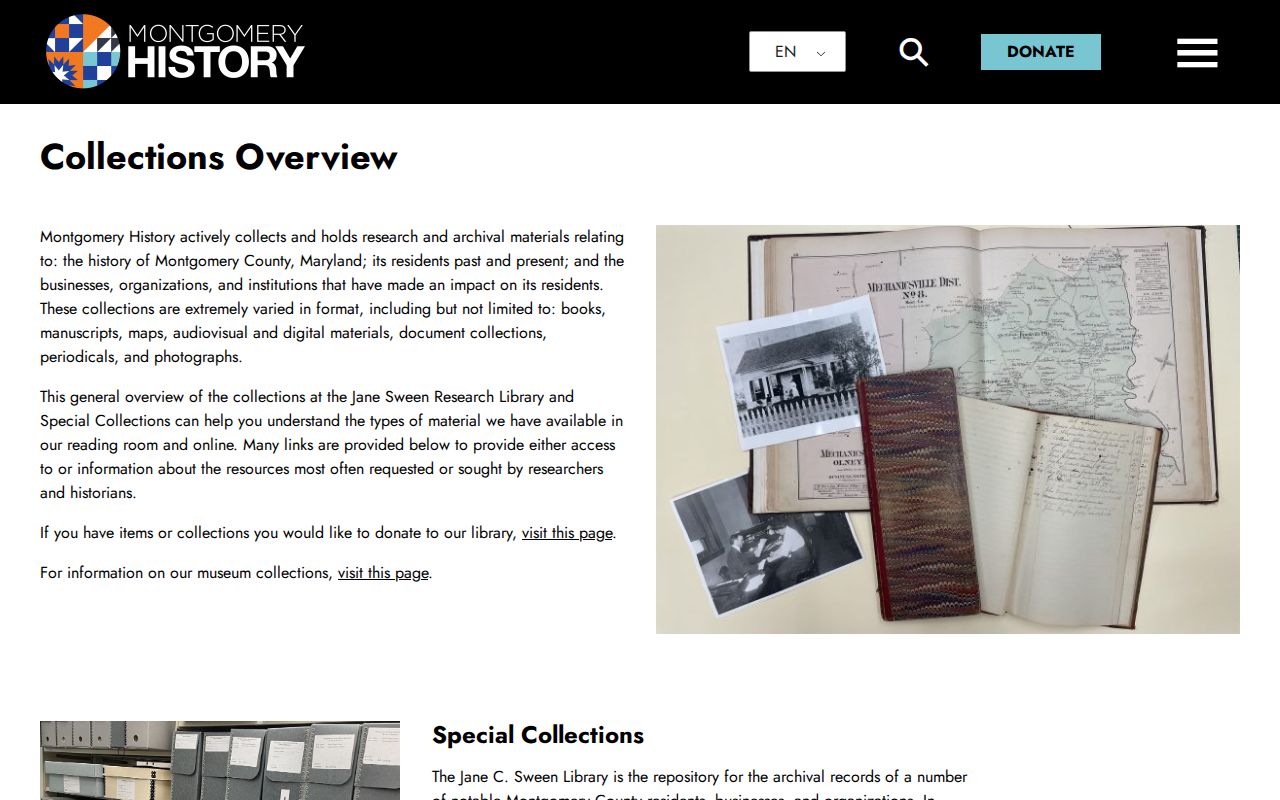
Books and archival items stay in the building and are viewed during scheduled reading-room appointments. Find the library at 111 W. Montgomery Avenue in Rockville. You can also reach the staff at 301-340-2825 and info@MontgomeryHistory.org to arrange research access.
Note: The online collection supplies up to five digital images free. Additional requests carry a stated $2-per-image charge.
Montgomery Village Directory Context
Every directory search needs a starting point. The Village history supplies one. It places the first model homes in Lakeside in August 1967 and the first residents in Goshenside and on Whetstone Drive on September 25, 1967. Those dates are strong leads for the earliest Village-era newspaper, directory, permit, and property work. They are not a household roll. Names lifted from community history still deserve a test against a dated residents directory or a county record before they anchor a family line.
| Year | Directory research context |
|---|---|
| 1776–1777 | Montgomery County formed in 1776 and surviving land records begin in 1777, forming the pre-Village county trail. |
| 1962 | Kettler Brothers began assembling the former Walker Farm and other properties for the planned community. |
| 1966 | Ground was broken in February; Montgomery Village Foundation was incorporated in October. |
| 1967 | Model homes opened in Lakeside in August, followed by the first residents in September. |
| 1969–1996 | Eastern Montgomery County criss-cross holdings provide the main address-order run where coverage exists. |
- Before 1966, search county farm, land, map, tax, will, and census material rather than a Montgomery Village street address.
- From 1966 through 1967, add development plats, permits, aerial tax maps, suburban telephone directories, and criss-cross volumes.
- From 1969 through 1996, use the Eastern Montgomery County address-order run at the Library of Congress where coverage exists.
- For later community context, compare Village publications and neighborhood names with the property and historical sources.
Newspapers can add the event and association context a directory lacks. The County Sentinel and the Gazette anchor local coverage. Maryland Digital Newspapers, Chronicling America, and Montgomery History microfilm round out the main stops. Cite the publication date and issue whenever a clipping supports a family connection. A story about a first household opens a question. But the record that fits it still closes the case.